Showing posts with label beverage. Show all posts

Wednesday, July 12, 2017

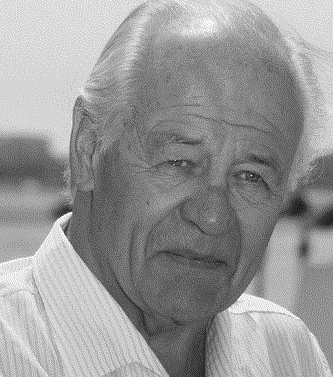
Freddy Heineken (1923-2002)

Born on November 4, 1923, in Amsterdam, The Netherlands, the son of Henry Pierre and Carla Heineken, Alfred Henry Heineken was always destined to work for the company that his grandfather had started in 1863.

Entering the company Heineken on June 1, 1941, during the Germany occupation of the country, Freddy was keen in advertising the product and he did so actively and passionately.

The company was founded in 1864 by his grandfather Gerard Adriaan Heineken but his son and successor, Henry Pierre, sold the family’s majority stake in 1942. And Freddy always wanted to buy it back. This he managed in 1954 when he bought it by establishing Heineken Holdings, of which he held a majority stake and he used this to buy 50.005 percent of the shares in Heineken International.
Within ten years he was financial director and also took charge of marketing and advertising, later culminating in the hugely successful campaign centered on the slogan ‘Heineken refreshes the parts other beers cannot reach,’ originally voiced for television by Danish entertainer Victor Borge.

As chairman of the board of directors of the company from 1971 until his resignation in 1989, he helped expand the company considerably. Freddy ran the company with a beady eye for the main chance, increasing its sales dramatically both at home and abroad.

In 2002, his daughter Charlene Lucille de Carvalho -Heineken inherited his shares in the brewery, becoming the riches Dutch persons.
Freddy Heineken (1923-2002)

Monday, November 7, 2016

William Bass

William Bass (1717 – 2 March 1787) founded the Bass Brewery in 1777. Before that he was the owner of a carrier business between London and Manchester.

William Bass began his involvement with beer by being a carter (a carrier) of raw materials for the Burton beer trade and then delivering barrels of made beer from the Burton brewers to the cities of London, Manchester and to Hull for the Baltic trade.

Through his transport business she could envision the potential from brewing. The ale he brewed waa of the east quality and suitable for the rigors of traveling the distance to reach London in good condition,

The brewery saw remarkable growth in its early years, with ale sent to Russia in 1784 and to North America by 1799.

Following his death in 1787, sometime prior to 1787, his son Michael Thomas Bass, operated the brewery, building up its export trade after 1821. By the end of the 19th century Bass was one of the biggest of more than 30 breweries, all crammed into the town center along with associated industries.
William Bass (Bass Brewery)

Monday, December 14, 2015

John Arbuckle

John Arbuckle was the son of a well to-do Scottish woolen-mill owner in Allegheny, Pa, where he was born, July 11, 1839.

He received a common school education in Pittsburgh and Allegheny.

In 1860, John Arbuckle entered the wholesale grocery business McDonald and Arbuckle, begun by his brother Charles, his uncle Duncan McDonald and his friend William Roseburg.

The uncle and friend left the business and John and Charles assumed charge.

Prior to the sixties coffee was not generally sold roasted or ground, ready for the coffee pot. Except in the big cities, most housewives bought their coffee green, and roasted it in their kitchen stoves as needed.

By 1865, John Arbuckle had satisfied himself at a carefully roasted coffee, packed while still warm in small individual containers would measurably overcome the objections to selling loose coffee in a roasted state. A good cup of coffee meant daily roasting until 1868, when Arbuckle perfected a glutinous mixture, made of Irish moss, gelatin, isinglass, white sugar, and eggs for preserving the freshness of roast coffee.

In 1868 he patented a process of glazing coffee, which had for its object the preservation of the flavor and aroma of coffee by sealing the pores of the coffee bean.

John Arbuckle was viewed as quite a trendsetter when he started selling his Ariosa brand coffee beans in brown paper bags.

Arbuckle was also the first coffee seller to realize the impact of sophisticated advertising.  His marketing campaigns emphasized the power of standard coffee and featured ads ridiculing the failed attempts of housewives at roasting their own beans.

In 1873, Arbuckle combined heart Rios and Santos beans to produce a blend called Ariosa. It was the first successful national brand of packaged coffee in the United States.

Ariosa became one of the best selling coffees in the United States, from the East Coast to as far as the western frontier, where cowboys boiled strong Ariosa coffee over their campfires and the Southwest, where Navajos built dwellings out of empty Ariosa wooden crates.

Arbuckles’ was so successful that in the 1880s the company established branches in New York, Kansas City and Chicago as well as ports in Brazil and Mexico. John Arbuckle died at his home Brooklyn home, March 27 1912.
John Arbuckle
Saturday, September 5, 2015

Anthony Talamo Rossi (September 13, 1900 – January 24, 1993)

Tropicana was founded in 1947 in Bradenton, Florida, by Anthony Talamo Rossi. It was founded with goal of bringing Floridians the kind of orange juice found in Rossi’s home country of Italy.

He was born in Messina, Sicily to a family of nine children. Anthony T, Rossi immigrated to the United States from Sicily when he was 21. He settled in Palmetto and began packing fruit gift boxes under the name Manatee River Packing Company.

He began packaging and selling fresh fruit to department stores, hotels and restaurants throughout the United States. As the business grew, the company moved to East Bradenton and became Fruit Industries, supplying the ingredients for among other things, the salads at New York’s famed Waldorf Astoria Hotel.

Rossi began producing frozen concentrate orange juice in 1952 and branded them Tropicana Pure Premium. In 1954 Tropicana engineer developed flash pasteurization, a process that preserved the fresh taste of the juice. The process uses a lower temperature than regular pasteurization, but heats the liquid for a longer period of time.

In 1978 founder Rossi retired and sold Tropicana to Beatrice Foods.
Anthony Talamo Rossi (September 13, 1900 – January 24, 1993)

Friday, July 3, 2015

Edwin Perkins (1889-1961)

Perkins was born in Lewis, Iowa in 1889 but spent his youth in the village of Hedley in southwestern Nebraska.

When he was a young lad, the family moved to a sod house on a farm in Nebraska.

His father owned a store, so Edwin often saw new products. He especially liked a new food called Jell-O.

When he was older, Edwin married and started a business called Perkins Products Company.

Perkins was interested in inventing and making new products. He had experimented with chemistry since his childhood, creating a number of products like deodorant and foot powder. He sold perfumes and other small items to stores across the country.

After World War I, he invented a tobacco remedy called Nix-O-Tine, the first of his many patent medicines.

Edwin had a new idea and invented Fruit Smack. It was a thick flavored syrup people mixed with water.

He then invented a way to make the drink flavors into powder. In 1927 Perkins reconstituted Fruit Smack into powdered crystals and packaged it in bright paper envelopes.

He called the powder ‘Kool-Ade’ but later changed the name to ‘Kool-Aid’. Perkins initially manufactured and sold Kool-Aid in his hometown of Hasting, Nebraska, moving the company to Chicago once the product was established.

Perkins set the original price of the drink powder at 10 cents per package, and he reduced the cost to 5 cents during the Great Depression, keeping Kool-Ade well within financial reach of most American families.

By the end of the Great Depression, Edwin Perkins owned a suburb mansion and developed hundreds of works in his factory.
Edwin Perkins (1889-1961)

Wednesday, September 10, 2014

Johann Jacobs (1869-1958)

Johann Jacobs was born in a rural community outside Bremen, Germany. In 1895, he established Jacobs Kaffee, which was to become one of Europe's leading coffee companies.

Jacobs had opened a small coffee shop began selling coffee, tea, cocoa, chocolate and biscuit.  Then he started roasting his own coffee. The name Jacobs soon became synonymous with coffee throughout most of Europe.

In 1930 his nephew, Walther Jacobs, joined the firm, fresh from the United States, where he had learned the value of advertisement.

With aggressive salesmanship, slick packaging and slogans such as ‘Jacobs Kaffee – satisfaction Down to the Last Bean’ the company expanded during Hitler’s Third Reich.

Jacobs Kaffee merges with Suchard-Tobler for form Jacobs Suchard in Europe in 1982.
Johann Jacobs (1869-1958)

Popular Posts

Other articles

Oxford Biographies